
Types of Business Budgets: Three Parts of a Master Budget
Introduction
The types of business budgets your company uses can make the difference between guesswork and clarity when planning for growth. Many leaders picture a single spreadsheet of revenues and expenses, but in reality, budgeting is more structured than that, especially as your company scales.
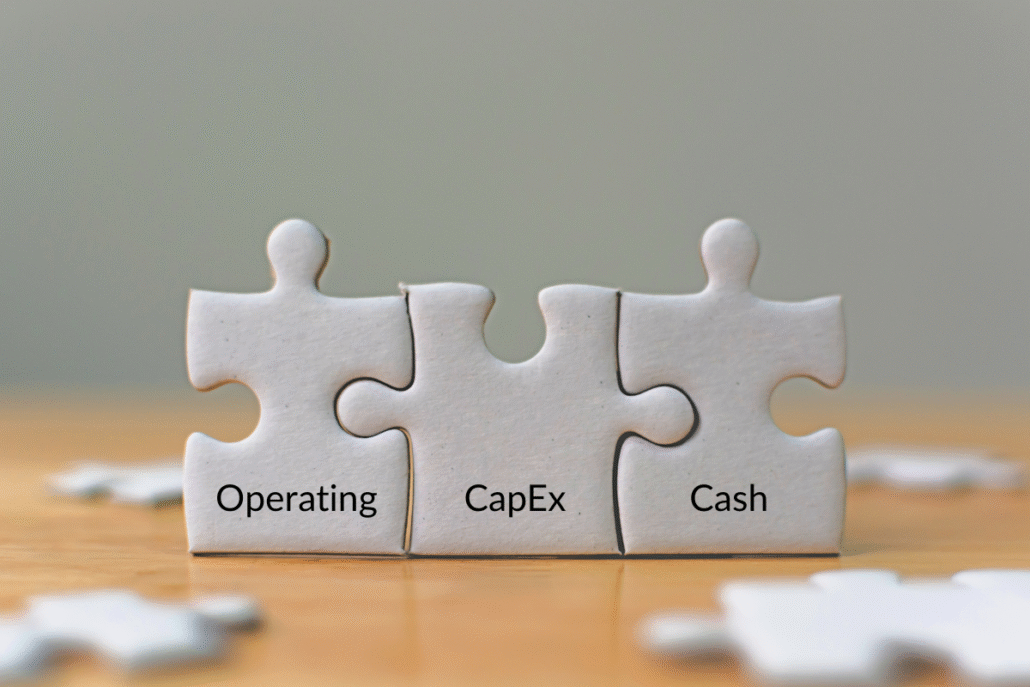
A master budget isn’t one document. It’s a coordinated framework built from three types of business budgets: the operating budget, the capital expenditure budget, and the cash budget. According to the Corporate Finance Institute, “Understanding the master budget and its components is a critical step in building a budgeting process that aligns strategy with planning and resource allocation.”
When businesses first implement a budgeting process, they usually begin with the operating budget because it ties directly to revenue and expenses. While that’s a natural starting point that illustrates profitability, it’s only part of the picture. The cash budget and capital expenditure budget are equally important for ensuring liquidity and funding future growth.
Operating Budget
The operating budget is the backbone of the master budget. It outlines expected revenues, cost of goods sold (COGS), and operating expenses for a period, usually one year.
Think of it as the company’s day-to-day financial plan. It outlines expected sales, staffing needs, expenses, and the resulting profit or loss.
For growth companies, the operating budget is critical because:
- Sales forecasts set the tone. An accurate sales projection drives production, hiring, and marketing spend.
- Expense discipline matters. As overhead grows, you need a clear view of costs to protect margins.
- Variance analysis improves agility. Comparing actuals to budget shows where you’re overspending or outperforming.
A strong operating budget provides early insight into profitability and whether your business works at scale.
If your team is building or enhancing your budgeting process, FP&A consulting services can accelerate the work considerably.
Capital Expenditure Budget
Growth requires investment. New equipment, facilities, or enterprise technology often come with a hefty price tag. That’s where the capital expenditure budget, or CapEx budget, comes in.
The CapEx budget is a business’s plan for long-term investments in fixed assets—property, plant, equipment, and other resources that support the company’s growth. Unlike the operating budget, which covers daily activity, the capital budget focuses on the big-ticket investments that fuel expansion.
As the Association for Financial Professionals explains, “The goal of capital budgeting is to determine whether an investment or project is worth pursuing, and to ensure the company’s capital resources are efficiently allocated.” In practice, this means evaluating not only the financial return on a project, but also whether it aligns with the company’s long-term strategy.
For growing businesses, a CapEx budget is essential because it:
- Prioritizes investments. Not every initiative can be funded at once. A disciplined capital budgeting process helps leaders weigh opportunity costs and direct resources toward the investments that matter most.
- Supports financing. Large purchases may require debt or equity. Planning ahead helps secure favorable terms.
- Prepares for scale. Whether it’s a warehouse, production line, or enterprise software, capital expenditures help prepare the business for expansion and long-term growth.
Without a CapEx budget, companies risk allocating capital to projects that strain cash flow and undermine long-term stability.
Cash Budget
Even profitable companies can run into trouble if they don’t have cash on hand when bills come due. That’s why the cash budget is such an important piece of the master budget.
The cash budget is a plan that details cash inflows and outflows. It captures client payments, payroll, vendor obligations, loan repayments, and other movements of cash.
For growth companies, the cash budget is essential because it:
- Highlights liquidity risks. Even profitable businesses can face a cash crunch if customer payments lag or expenses rise unexpectedly. For more on common pitfalls, see our post on cash flow mistakes that can sink your business.
- Guides financing. A clear cash budget shows when you’ll need outside funding and helps you time debt or equity raises.
- Prevents stalls. With visibility into future cash needs, you can fund hiring, inventory, and marketing without slowing momentum.
A solid cash budget gives leaders the foresight to act before problems emerge.
How the Three Budgets Work Together
Each of the three types of business budgets serves a unique purpose, but they’re interdependent.
- The operating budget drives day-to-day profitability.
- The capital expenditure budget maps long-term investments.
- The cash budget ensures liquidity to execute both.
Together, they provide a full picture of financial health and future needs. They help leaders see not only where the business is heading, but whether resources are in place to get there.
Many growth-stage companies struggle because they rely too heavily on the operating budget alone. By layering in capital and cash budgets, you move from reactive planning to proactive strategy.
For a deeper review of how well your budgeting process supports your goals, consider starting with a Financial Health Check™.
The Bottom Line
Strong budgets don’t just keep the numbers in order. They give you the insight to make faster, better business decisions. By combining operating, capital expenditure, and cash budgets into a master budget, you create the roadmap to scale with confidence. If you’re ready to build that roadmap, schedule a free consultation to talk through where your company stands.


